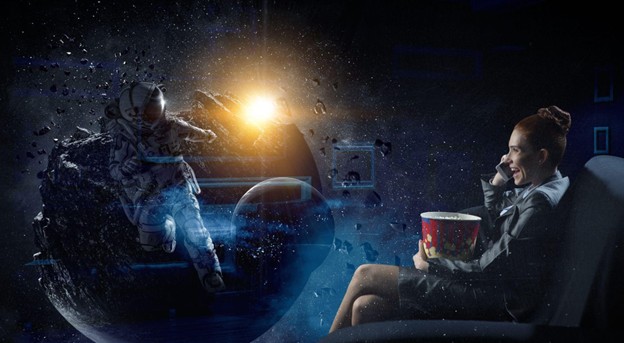
Within the first moments of exploring how science shapes storytelling, Matthew Blaisdell highlights a broader cultural pattern: some of the most memorable films resonate because they mirror the same principles that guide physics and mathematics. Motion, gravity, time, probability, and scale are not just scientific ideas; they are narrative engines that filmmakers use to build tension, structure stories, and create emotional impact.
Cinema and science may appear to belong to completely different worlds. One operates through imagination and artistic expression, while the other depends on equations, experiments, and measurable laws. Yet when films feel believable, even when they depict fantastical worlds, it is often because they quietly rely on real scientific logic. Audiences may not consciously recognize the physics at work, but they instinctively respond to stories that follow the rhythms of cause and effect.
Over time, this overlap has created a fascinating relationship between storytelling and scientific thinking. Movies frequently translate complex concepts into visual experiences, turning abstract theories into narratives that audiences can feel and understand.
Motion and Momentum in Storytelling
One of the most fundamental ideas in physics is motion. Objects move because forces act on them, and those forces produce consequences. Film narratives follow a remarkably similar structure.
A story begins with a state of balance, something disrupts it, and the characters respond to that disruption. Every decision generates new outcomes, pushing the narrative forward. Just as momentum keeps objects moving in physics, narrative momentum keeps audiences engaged.
In both science and storytelling:
- Initial conditions matter. A small event early in a story can lead to massive consequences later.
- Forces drive change. Characters, conflicts, and motivations function like forces pushing the story in different directions.
- Momentum builds over time. The longer tension develops, the more powerful the eventual resolution becomes.
When filmmakers understand these structural parallels, stories feel natural and satisfying. The narrative moves forward in ways that resemble the predictable yet dynamic systems found in physics.
Time as Both a Scientific and Narrative Tool
Time connects film and science very directly. In physics, time is a measurable dimension that interacts with space and motion. In cinema, time becomes a flexible storytelling device.
Films manipulate time constantly. Flashbacks reveal earlier events, montages compress long experiences into short sequences, and slow-motion scenes expand moments that would normally pass instantly.
This flexibility mirrors scientific exploration of time in intriguing ways:
- Time dilation theories have inspired numerous science fiction narratives.
- Nonlinear storytelling reflects the idea that the perception of time is subjective.
- Parallel timelines explore the possibilities created by branching outcomes.
Audiences respond strongly to stories that experiment with time because the concept itself already carries mystery, often leading to deeper engagement and emotional investment in the narrative as they ponder the implications of different timelines and outcomes. Cinema becomes a medium that visualizes the questions scientists have explored for decades structures
The Mathematics Behind Narrative Patterns
Mathematics often operates invisibly within film structures. Screenwriters frequently rely on patterns and proportions that mirror mathematical concepts, even when they do not explicitly reference them.
Many films follow rhythmic structures that resemble mathematical sequences. Scenes build toward turning points, pacing accelerates toward climaxes, and tension rises in measurable intervals.
Several structural patterns illustrate this connection:
- Three-act storytelling divides narratives into balanced segments that guide pacing.
- Symmetry in plot development creates satisfying narrative arcs.
- Probability and uncertainty shape suspense and surprise.
When audiences feel that a story unfolds smoothly, it is often because the pacing reflects an intuitive mathematical balance. The film feels neither rushed nor slow because its structure aligns with patterns people instinctively recognize.
Visualizing the Invisible
Physics frequently addresses intangible phenomena such as gravity, electromagnetic forces, and quantum interactions. Cinema excels at making invisible forces visible.
Through visual effects, cinematography, and sound design, films translate abstract scientific ideas into experiences audiences can observe and feel. Planetary motion, microscopic processes, or vast cosmic distances become tangible on screen.
This visualization accomplishes something powerful:
- Complex ideas become accessible. Viewers can grasp concepts that would otherwise remain theoretical.
- Curiosity expands. Films frequently spark interest in real scientific questions.
- Learning happens indirectly. Entertainment becomes a pathway to understanding.
By transforming invisible forces into dramatic visuals, cinema serves as a bridge between scientific complexity and everyday curiosity.
The Role of Scale in Science and Film
Physics constantly explores scales from subatomic particles to massive galaxies. Films frequently play with similar shifts in scale to create dramatic impact.
A story may focus on intimate personal decisions while simultaneously connecting those choices to larger social or cosmic consequences. The contrast between small and large creates emotional depth.
Scale influences narrative in several ways:
- A microscopic perspective highlights detail and precision.
- Human-scale storytelling builds emotional connection.
- Cosmic perspective creates awe and wonder.
The ability to move between these levels gives filmmakers tools similar to those scientists use when studying the universe. Both disciplines rely on perspective to reveal patterns that might otherwise remain hidden.
Why Audiences Respond to Scientific Storytelling
Stories grounded in scientific principles often feel more immersive. Even when films explore impossible scenarios, a foundation in real logic allows audiences to suspend disbelief.
This connection emerges because people naturally look for patterns. Physics explains patterns in nature, while storytelling organizes patterns in human experience. When the two intersect, narratives feel simultaneously imaginative and believable.
Several elements strengthen this connection:
- Consistency of rules. Worlds that follow clear internal logic feel authentic.
- Cause and effect. Events unfold in ways that make sense.
- Intellectual curiosity. Audiences enjoy stories that challenge them to think.
Films that incorporate these elements often stay memorable long after the credits roll.
Science as a Source of Creative Inspiration
Scientific exploration has long inspired filmmakers. Discoveries about space, time, and energy provide endless material for storytelling.
But the influence moves in both directions. Cinema also shapes the public imagination about science. A compelling film can inspire viewers to learn more about astronomy, physics, or mathematics simply because the story sparked curiosity.
This exchange creates a dynamic cultural loop:
- Scientists explore the universe and publish new ideas.
- Artists translate those ideas into narrative experiences.
- Audiences become curious and engage with the science behind the story.
The result is a continuous conversation between creativity and discovery.
Where Storytelling and Science Meet
The connection between physics and film ultimately reflects something deeper about how people understand the world. Both disciplines search for patterns, explore possibilities, and attempt to explain complex systems.
Physics uses equations and experiments. Cinema uses characters and narrative arcs. Yet both seek to answer similar questions about motion, time, change, and consequence.
When filmmakers tap into these universal principles, stories gain depth. They resonate not only because of dramatic events but also because they mirror the fundamental structures that shape reality.
The most powerful films do more than entertain; they reveal patterns that feel familiar even when the setting is extraordinary. In that way, science and storytelling continue to travel the same path, each helping audiences see the universe from a new perspective.